Custom Railings
More than just a barrier.
|
Creation of a custom hand forged railing
presents special challenges. The market is dominated by
'cut and paste' assembly shops, who take standardized
factory made elements, made of modern mild steel, and
weld them up into frameworks. This is then called 'hand
made wrought iron work' even though it is machine
produced and most certainly not made of antique wrought
iron metal at all! One of the most important factors
which will dominate over any creative possibilities are
the current Ontario Building Codes, which have specific
requirements on size, shape, and materials on structural
hand rails. (A short overview of some of these
requirements is available as a reference HERE.)
All of the past installations seen here most importantly
show creative approaches to these limits.
Maxwell &
Reade House - Manitoulin Island
Spring 2009 - Fall 2010
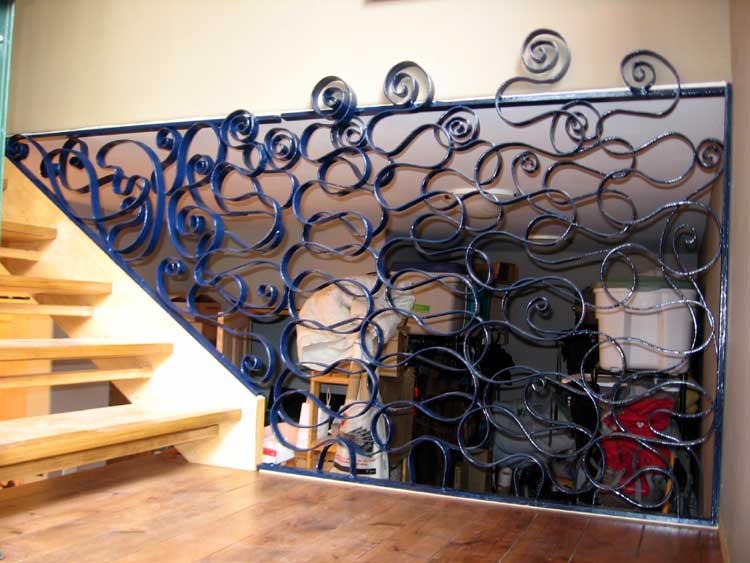
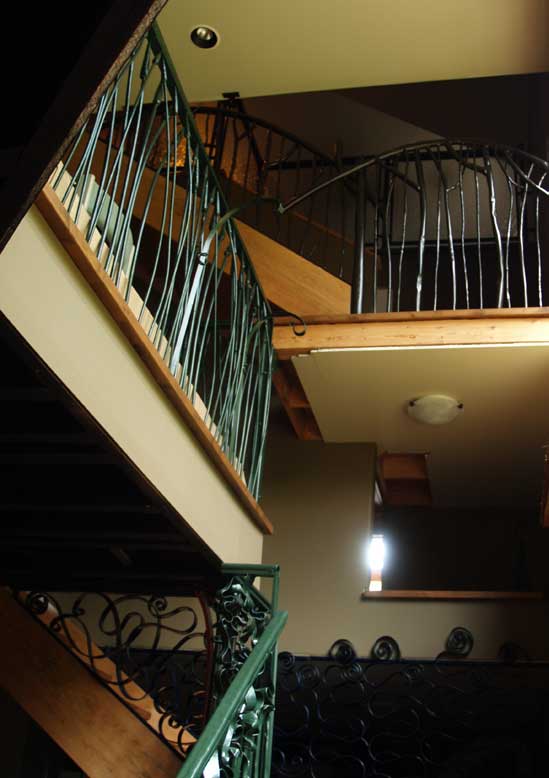
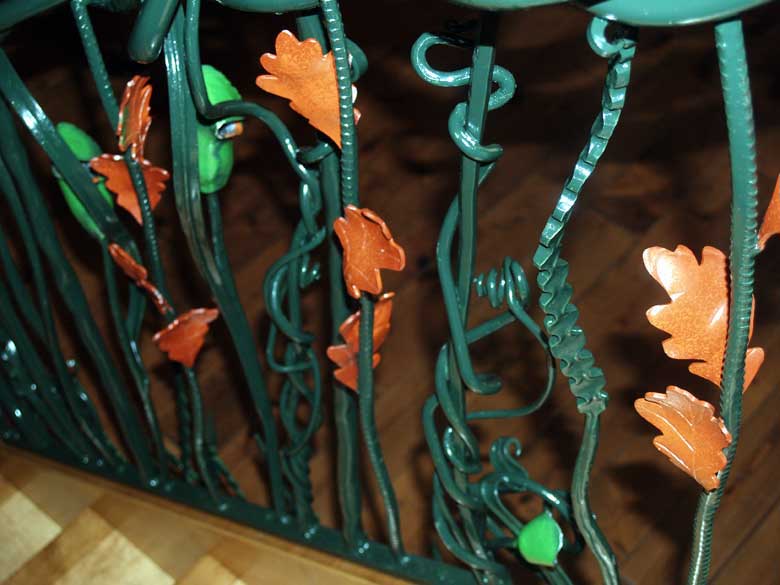
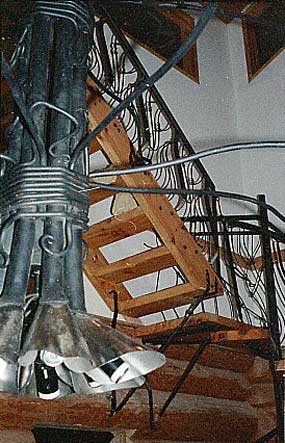
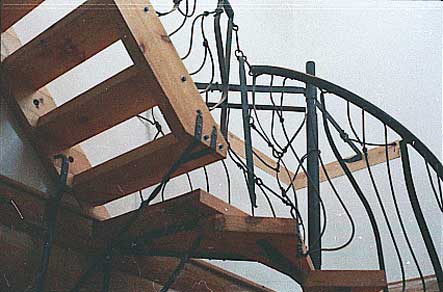
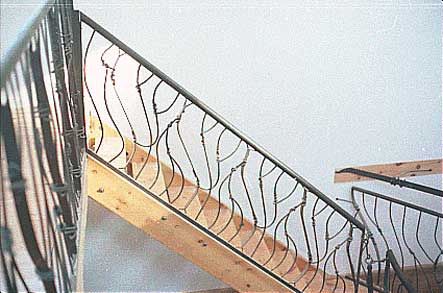
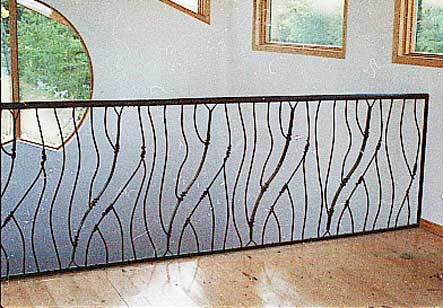
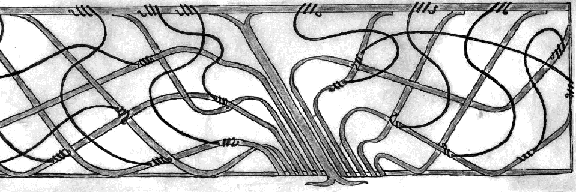
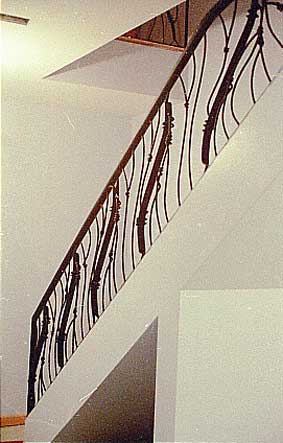
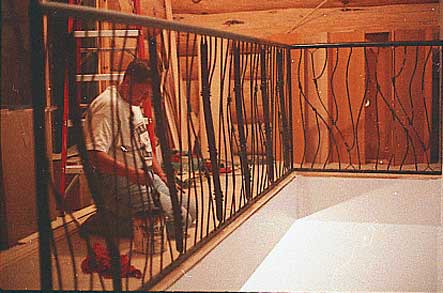
A set of railings were required for this custom designed open concept home, winding from basement up to the second floor. This is a large project, involving the creation of over 20 individual panels and pieces. An overall concept was 'Sea to Shore to Sky', with individual segments using a progression of organic designs which integrate thoughout. Because of the duration and complexity of the project, considerable use of internet documentation and video was made over the life of the project. There is a separate detailed description. Richards House - Toronto
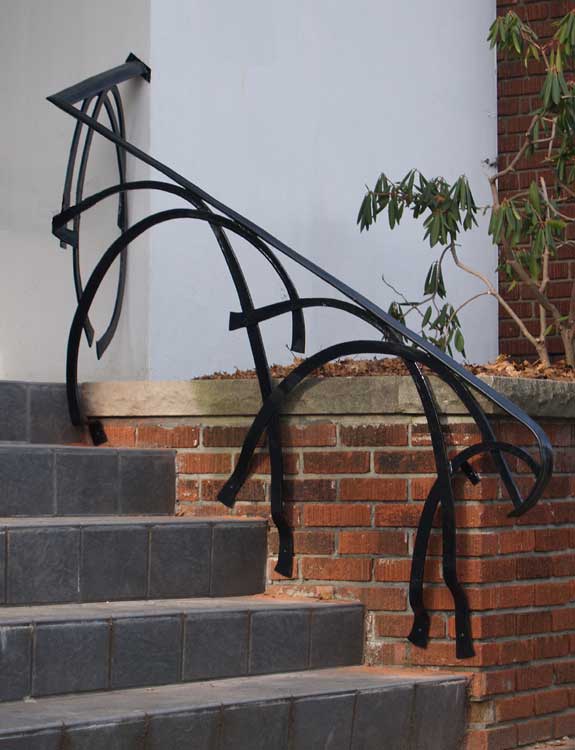
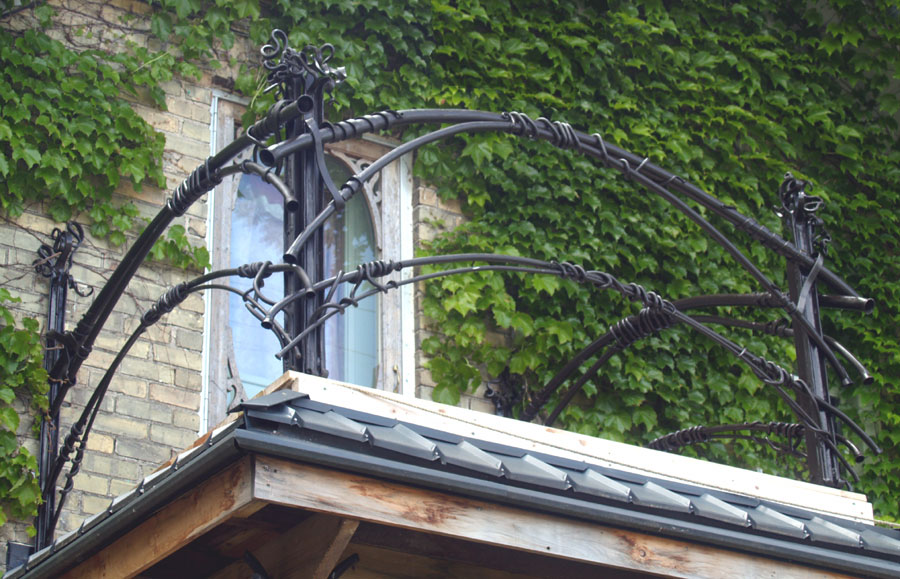
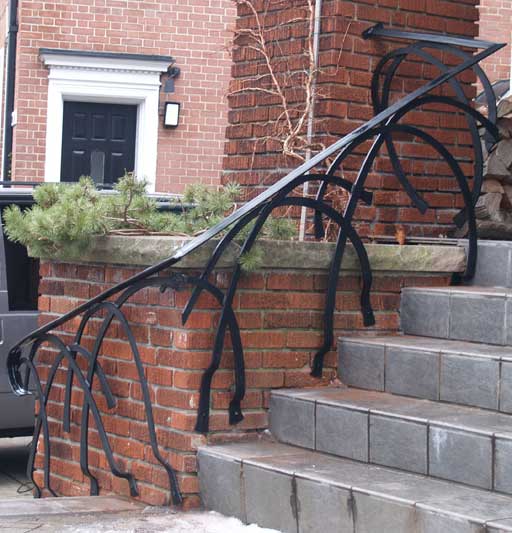
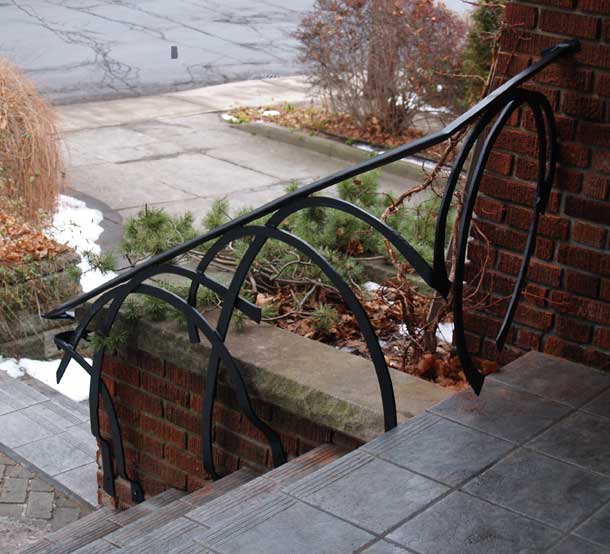
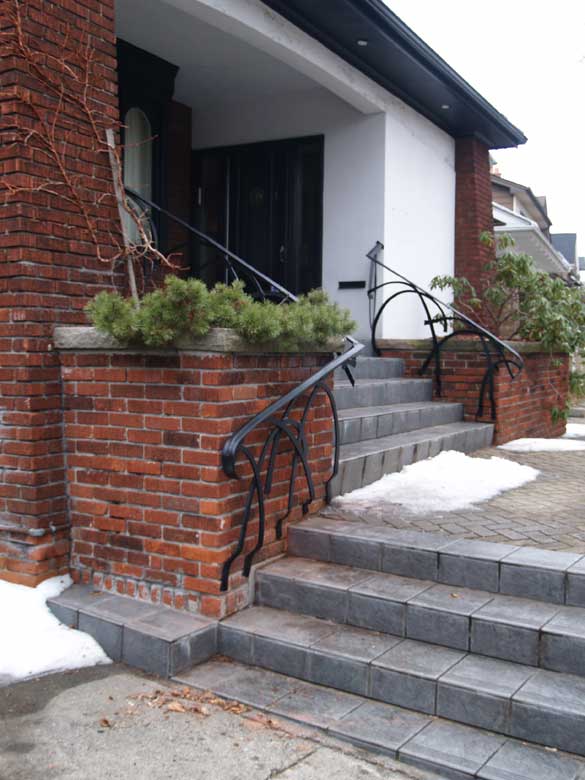
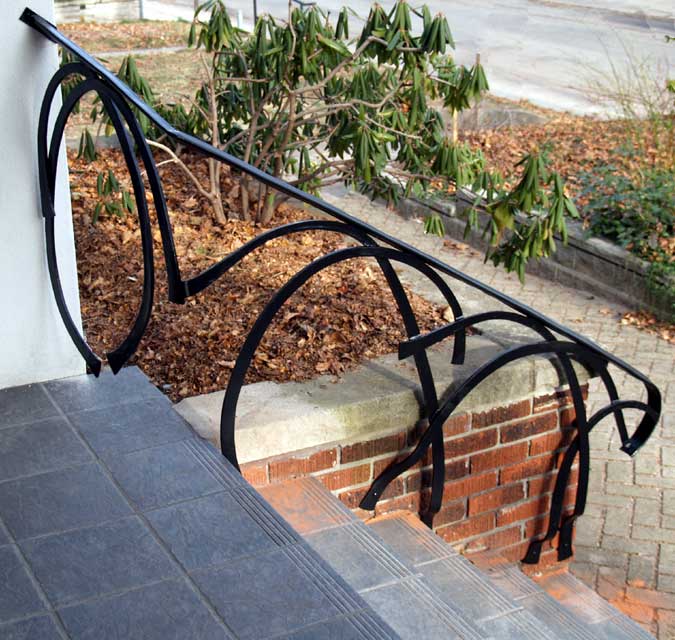
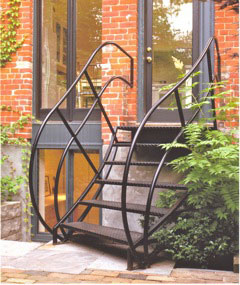
Originally built in the 1920's in the
Arts and Crafts style, the interior of the home is
almost entirely original, with wide plank oak floors
and trims. The owners have been able to match the
architecture with matching Rennie Mackintosh styled
furniture. On the exterior, there has been
considerable renovating done, most especially the
replacing of the old windows with the arch shaped
panes. Aging concrete was repaired and caped with
ceramic tiles. We all wanted to keep to the spirit of
Arts and Crafts : clean lines, obviously forged
elements, sweeping curves to pick up on the large
curve framing the porch, plus the series of smaller
arches of the windows.
Riverdale House - Toronto
I was contacted by a couple who owned a renovated early 1900's home on a quiet street a couple of blocks from the site of the old Riverdale Zoo in Toronto. The newly renovated front deck was of rich western cedar planking and beams, with the roof sheathing of copper sheet. The new extended deck line was cut away in a half circle to preserve a tree planted some years earlier. A primary concern was having a design that reflected the overall natural feeling that the other elements of the landscape and deck had established. Strict adherence to the building codes was less of an issue, but the adult owners did want the railings and handrails to be safe and sturdy. One important factor that had to be considered was maintaining the view from the large and low mounted front window across into the park on the other side of the street. On the technical end, one railing unit would have to be curved in a half circle to fit around the deck cut out for the tree. Also the hand rail on the left side as you face the house had to fit the irregular curvature of the stairs on that side. The overall project required two stair
rail sections, one straight and one curved, each about
8 feet long. There were two flat panel sections, one
five, the other seven feet long. The large half circle
was fashioned of two pieces, a total measure around
the curve was about nine feet. Using a series of thin
flat bars, but set on edge to the viewer, makes the
uprights almost 'disappear' optically from the inside
window. Each upright retains its strength from the 2
inch width of the bar - so the thickness could be
reduced to 3/16 inch. From passers by in the street,
the railing would be primarily viewed from an angle.
With the individual wide uprights spaced for the code
required 3 3/4" inch gaps, any angled view creates the
impression of a solid wall of metal. For this project I created a detailed
photo essay of the work as it progressed, from initial
concept to finished installation.
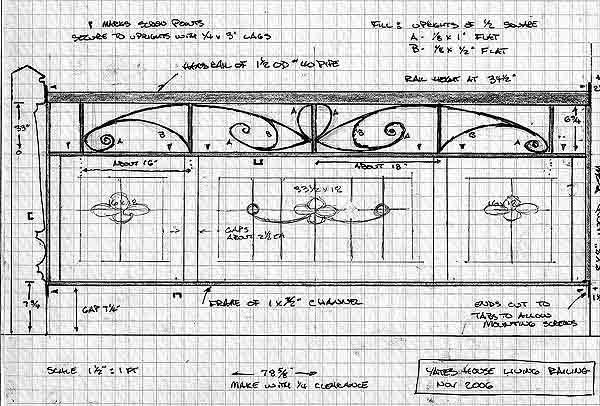
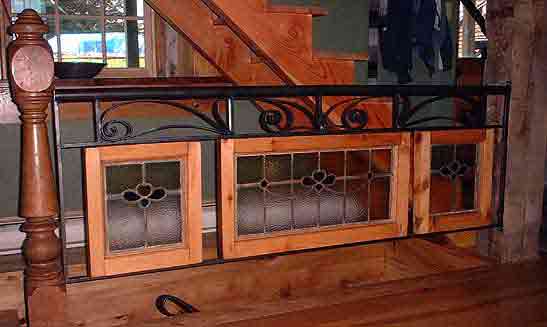
'Yates House' is an 1800's squared log home that had been extensively renovated to an open concept plan which left the beams and much of the original heavy timbers exposed. Like many of the buildings of this era, the interior was relatively small, so the owner did not want the stair and balcony railings to over power the space. I had done a set of exterior plant boxes for the first house Lisa had owned in this small village north of Orangeville. She had acquired a set of antique stain glass panels, and wanted a relatively simple framing that would allow these re-finished pieces to become the major decorative element. The upper curves were kept fairly simple so as not to overpower the lines from the simple leading of the stained glass. For the run of stairs from basement level to ground, then a second run ground to second floor, only a simple tubular hand rail was requested (outside of code at the owner's responsibility). Knowing of the customers love of Celtic art, and having the width of the original hand hewn beams to mount against, the mounts for the hand rail could be quite elaborate. Thick flat bar was drawn, folded and contoured into a set of reversal curves suggested by those common in Celtic Iron Age bronze artifacts. To accent the historic aspects of the house, the metal was finished with satin finish varithane. This protects the surfaces but allows the variations in colour and texture produced by the forging process to remain visible.
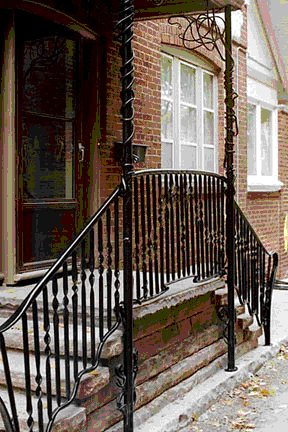
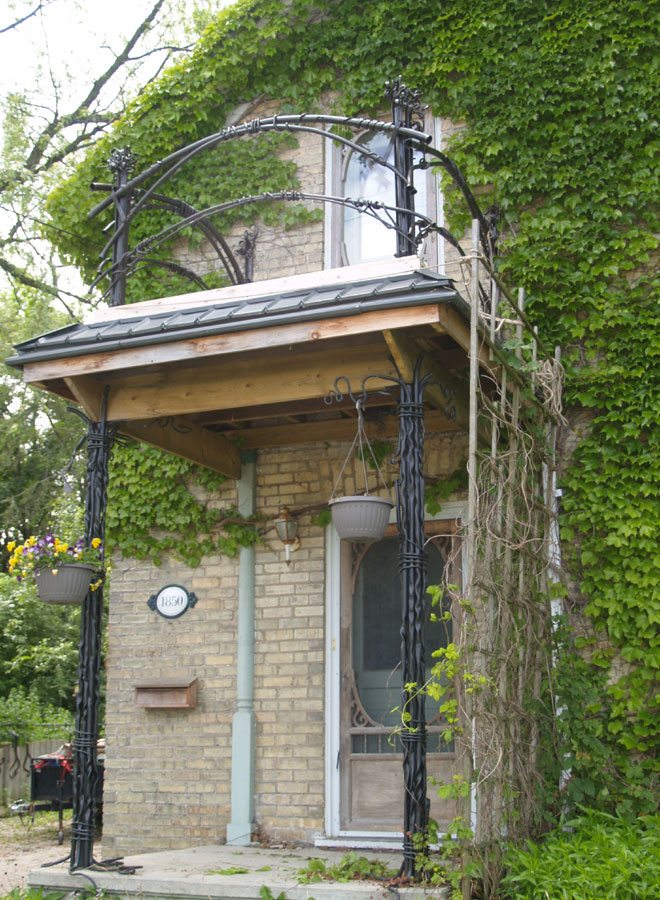
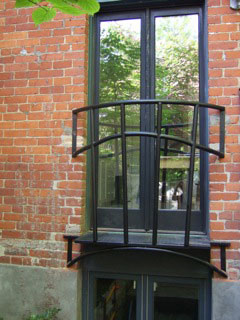
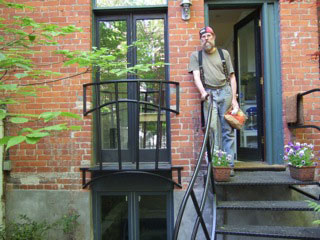
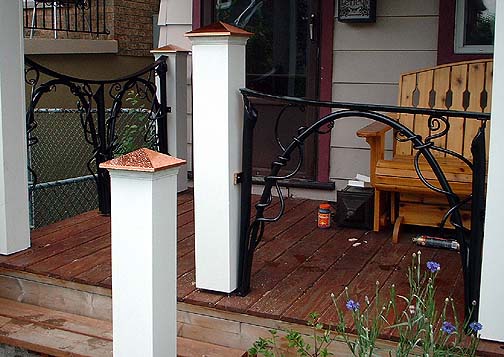
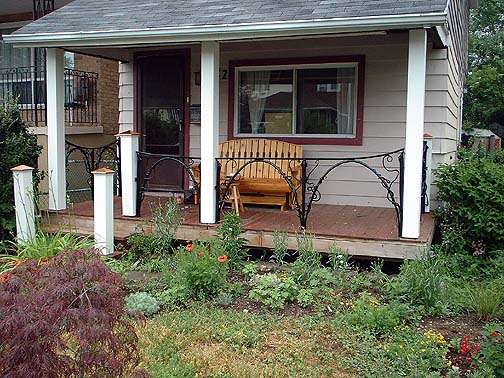
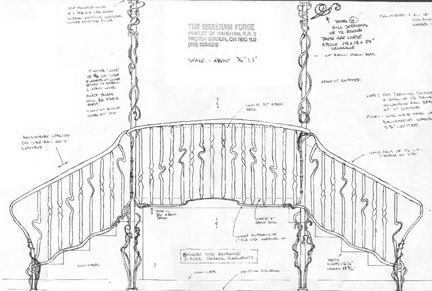
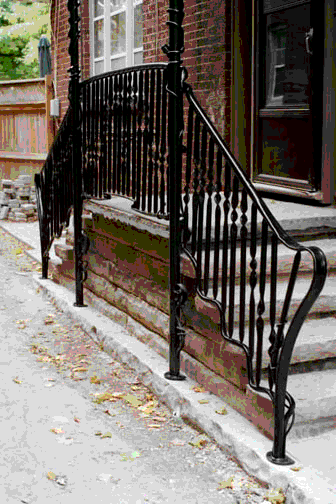
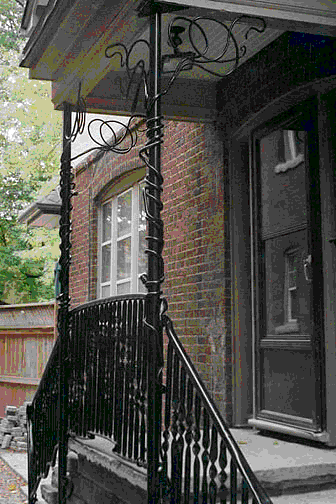
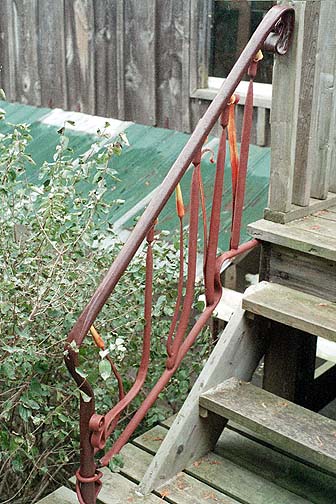
'Pease House' is an 1900's small frame construction home in the East Beaches area of Scarborough. Originally these small homes were built and owned by working class families. The neighbourhood has a range of styles and ages of houses, all fairly small, set closely together with small yards and fairly close to the street. The whole area is going through a real upswing over the last decade, with younger couples and new families purchasing what are inexpensive homes - for Toronto anyway! Almost every house is undergoing renovation work of some kind. The owners here were no exception. Considerable work had already been done inside. The sagging porch had been removed and replaced inside the original frame space. The deck was close to ground level, with only two steps up from the walk. The customer wanted to set off his front yard, and provide a distinctive focus to what was a fairly plain house. Right from the start, one factor made a truly original design possible. Because of the low height of the deck, the restrictive Ontario Building Code provisions did NOT APPLY. The project required two side panels at about six feet long plus two front panels, one at three feet and one at eight feet. Working inside a fairly conservative budget, it was decided to reduce the number of individual support elements, but then to increase the complexity of each support. (Instead of many simple uprights, there would be few complex ones.) This allowed for much more aggressive forging to be used when creating the elements. The customer had liked the sweeping curves they had seen in other work I had created. A number of potential designs were generated as thumb nails, with one based on a tubing upright and tendrils topped with a wide flat handrail finally chosen. The finish was a semi-gloss paint (chosen for durability). I think the result was excellent. The vine like lines of the uprights and the light airy design is accented by the natural plantings in the front garden. The customer was quite pleased with how the new railing attracted attention. In fact at least six passers by commented on how good the railing looked - just in the couple of hours we took to install the pieces! Fall - 2002 'Binkert & Wiltse House' is a 1920's 'cottage style' home in the Avenue Rd / St Clair area of Toronto. Originally the narrow side lane way was built to accommodate carriages, increasingly the size of modern automobiles was making travel down the shared lane difficult. The home owner decided to replace the original wide brick balcony edging. Here the project was to create both railings and support beams for a side entrance porch, with the total width of the new elements to be no more than 4". Consultation with the Client generated about a dozen potential designs for the balustrades. The final design used heavy gauge steel tubing for both structural strength and visual weight. This material would be forged to create an overall 'organic' feel to the completed metalwork. It was also necessary to ensure the completed stair and balcony railing sections would conform to local building codes.
Fall 1996
 |